
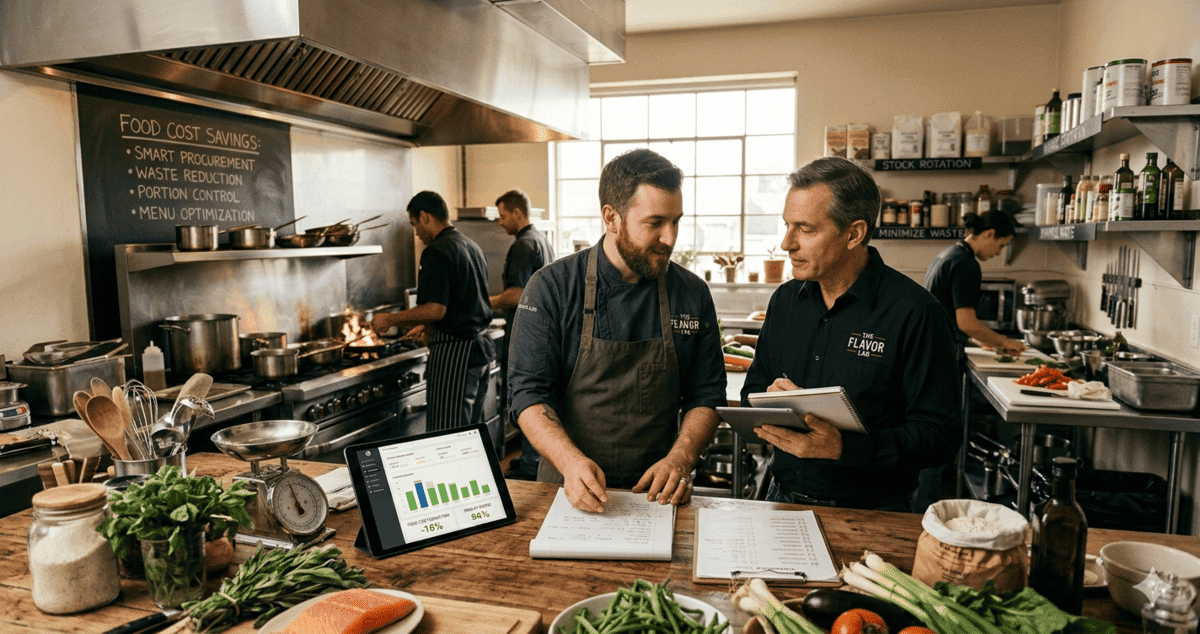
Running a successful restaurant or café is not just about great food—it’s also about smart cost management. One of the biggest challenges owners face is how to reduce restaurant food costs without affecting taste or customer satisfaction.
The good news? You don’t need to cut quality to save money. With the right strategies, you can control costs and still deliver excellent food.
Reduce Restaurant Food Costs Without Sacrificing Quality

1. Optimize Your Menu (Menu Engineering)
Your menu directly impacts your food cost.
Focus on high-profit dishes
Remove low-selling items
Use similar ingredients across multiple dishes
This helps you reduce restaurant food cost by minimizing waste and improving ingredient usage.
2. Control Portion Sizes
Over-portioning is one of the most common reasons for high food costs.
Standardize serving sizes
Train staff to follow exact portions
Use measuring tools in the kitchen
This ensures consistency and helps control unnecessary expenses.
Also Read- Why Tracking Restaurant Food Cost in Faridabad Is the Key to Success
3. Reduce Food Wastage
Food waste = lost money.
Simple ways to reduce waste:
Store ingredients properly
Use FIFO method (First In, First Out)
Track daily wastage
Even small improvements can significantly reduce restaurant food cost over time.
4. Smart Inventory Management
Poor inventory leads to spoilage and over-ordering.
Maintain a weekly inventory check
Use inventory management software or simple Excel sheets
Order based on demand, not guesswork
Efficient inventory control is key to reducing food costs.
5. Buy Ingredients Smartly
Sourcing plays a huge role in cost control.
Purchase from reliable wholesale suppliers
Compare prices regularly
Buy in bulk for non-perishable items
Smart purchasing decisions help you reduce restaurant food costs without lowering quality.
6. Train Your Staff Properly
Your kitchen staff directly impacts food cost.
Train them to:
Follow standard recipes
Avoid overuse of ingredients
Handle food carefully
A well-trained team can save thousands every month.
7. Use Seasonal and Local Ingredients
Seasonal ingredients are:
Cheaper
Fresher
Easily available
This not only reduces cost but also improves food quality—win-win!
Also Read- Restaurant Food Cost Secrets: Smart Sourcing & Waste Reduction Tips
8. Monitor Food Cost Regularly
You can’t improve what you don’t track.
Calculate food cost percentage weekly
Set a target (usually 28–35%)
Adjust pricing or portions if needed
Regular monitoring helps you stay in control.
9. Standardize Recipes
Consistency is key in cost control.
Create standard recipes for every dish
Fix ingredient quantities
Avoid “ अंदाज़ से cooking ”
This ensures quality and prevents overuse of ingredients.
10. Reuse Ingredients Creatively
Don’t waste—reuse smartly.
Examples:
Vegetable trims → soups or stocks
Leftover bread → croutons
Extra sauces → base for other dishes
Creative usage helps reduce waste and maximise profit.