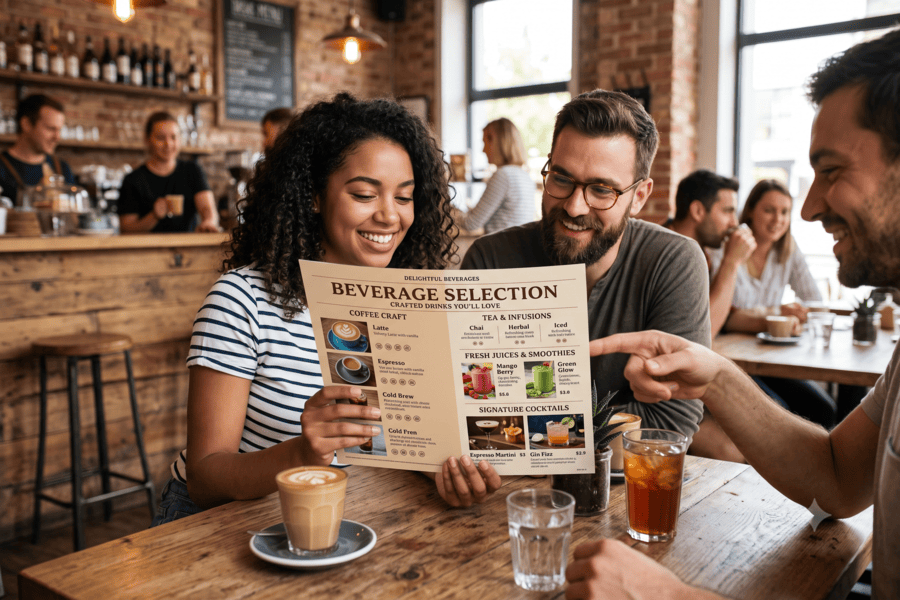
A well-planned beverage menu can do much more than simply offer customers tea, coffee, soft drinks, or mocktails. For restaurants, cafés, QSRs, and bars, beverages can become an important source of revenue, increase average order value, and improve the overall customer experience.
The key is beverage menu planning that matches customer preferences, food offerings, pricing, and current trends.
How to create a beverage menu that customers genuinely want to order.
1. Understand Your Target Customers
The first step in beverage menu planning is understanding who your customers are.
Ask yourself:
- Are your customers students, families, professionals, or premium diners?
- Do they prefer coffee, shakes, mocktails, juices, or traditional drinks?
- What is their average spending capacity?
- Are they looking for quick refreshments or an experience?
For example, a café targeting young customers may focus on cold coffees, frappes, iced teas, boba-style drinks, and creative mocktails. A family restaurant may perform better with fresh juices, mojitos, shakes, and traditional beverages.
A successful menu should always be designed around what your customers are most likely to order.
Also Read: How Beverage Consultancy Services Can Drive Product Innovation & Compliance in the Drink Industry
2. Create a Balanced Beverage Menu
Avoid creating a menu with too many similar drinks. A well-balanced beverage menu should offer variety without overwhelming customers.
Consider including categories such as:
- Hot Coffee
- Cold Coffee
- Tea and Speciality Tea
- Mocktails
- Fresh Juices
- Milkshakes
- Smoothies
- Iced Teas
- Soft Beverages
- Seasonal Specials
Each category should have a clear purpose. Focus on drinks that match your restaurant or café concept.
For example, a Mexican QSR may feature spicy fruit coolers, citrus-based mocktails, and refreshing iced beverages, while a continental café may focus more on coffees, smoothies, shakes, and signature coolers.
3. Add Signature Drinks
Signature beverages help your business stand out from competitors.
Instead of offering only standard options like Virgin Mojito or Cold Coffee, create unique drinks with interesting names, flavours, and presentation.
Examples include:
- Mango Chilli Cooler
- Tropical Sunset
- Berry Blast Iced Tea
- Mexican Citrus Fizz
- Hazelnut Cold Brew
- Chocolate Cookie Shake
Signature drinks can become a reason for customers to visit your outlet again. They also work well for social media marketing because visually attractive beverages are often shared online.
4. Keep the Menu Simple and Easy to Read
Customers should be able to understand your beverage menu quickly.
Avoid:
- Too many options
- Complicated descriptions
- Similar drinks with confusing names
- Excessive categories
Use clear categories and short descriptions. Highlight bestsellers or signature drinks to guide customers toward profitable options.
For example:
Tropical Mango Cooler
A refreshing blend of mango, citrus, and sparkling soda.
A simple description can make an unfamiliar drink more appealing.
Also Read- How to Hire Restaurant Consultants in Gurgaon for Menu Planning
5. Price Beverages Strategically
Pricing is one of the most important parts of beverage menu planning.
Your prices should consider:
- Ingredient cost
- Glassware and packaging
- Labour cost
- Competition
- Location
- Customer spending behaviour
- Desired profit margin
Avoid pricing every drink based only on competitor prices. Calculate your actual food and beverage cost first.
It is also useful to offer beverages at different price points. This allows customers to choose according to their budget while giving your business opportunities to increase average order value.
6. Focus on High-Profit Beverages
Some beverages can generate better margins than others. Coffee, mocktails, iced teas, lemonades, and speciality drinks can often provide strong profitability when properly costed and controlled.
Identify:
- High-selling drinks
- High-profit drinks
- Low-performing drinks
- Expensive items with low sales
Review your beverage sales regularly and remove drinks that are not performing well.
A smaller menu with strong-selling items is often better than a large menu with multiple slow-moving products.
7. Consider Food and Beverage Pairing
Your drinks should complement your food menu.
For example:
- Burgers and sandwiches pair well with coolers and shakes.
- Spicy food works well with refreshing citrus drinks.
- Mexican food can be paired with fruit-based or tangy mocktails.
- Desserts can be paired with coffee and cold beverages.
- Food and beverage pairing can also encourage customers to order additional items.
You can create combo offers such as:
Burger + Fries + Signature Cooler
This improves customer convenience while increasing the average bill value.
8. Use Seasonal Beverage Trends
Seasonal drinks can create excitement and encourage repeat visits.
During summer, consider:
- Lemonades
- Mojitos
- Fruit coolers
- Iced teas
- Cold coffees
- Smoothies
During winter, focus more on:
- Hot chocolate
- Specialty coffee
- Flavoured lattes
- Masala tea
- Warm beverages
Limited-time beverages can also create urgency and give customers a reason to try something new.
9. Make Beverage Presentation Attractive
Presentation plays an important role in beverage sales.
Use:
- Attractive glassware
- Fresh garnishes
- Interesting colours
- Branded cups
- Creative serving styles
However, presentation should remain practical and cost-effective. A drink should look attractive without making preparation slow or complicated.
For QSRs, speed and consistency are especially important.
10. Train Your Staff to Recommend Drinks
Your team can significantly influence beverage sales.
Train staff to suggest suitable beverages based on customer orders.
For example:
“Would you like to try our signature mango chilli cooler with this?”
Simple recommendations can increase beverage attachment rates and overall sales.
Staff should also know:
- Ingredients
- Flavour profiles
- Bestsellers
- Food pairings
- Allergens
- Preparation time
Final Thoughts
Effective beverage menu planning is about creating the right combination of customer preferences, profitability, variety, and brand identity. A successful beverage menu should be easy to understand, visually appealing, profitable, and aligned with your food concept.
Regularly analyse sales data, listen to customer feedback, test new drinks, and remove items that are not performing well. With the right strategy, beverages can become one of the strongest revenue-generating categories for your restaurant, café, or QSR.
A thoughtfully planned beverage menu doesn’t just give customers something to drink—it gives them another reason to order, return, and remember your brand.