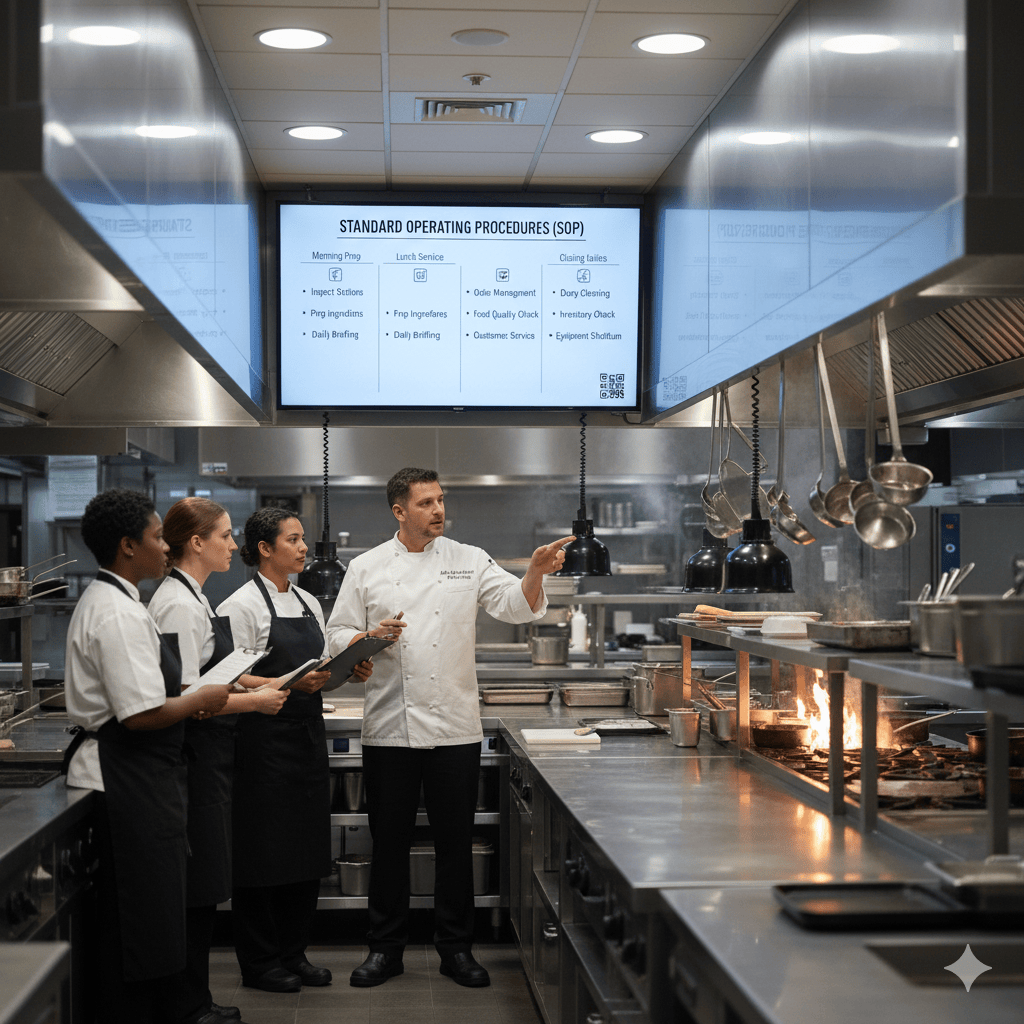
In the whirlwind of restaurant life—where speed, quality, and customer expectations collide—minor missteps can turn a great experience into an average one fast. The secret to avoiding costly confusion and ensuring each guest leaves satisfied isn’t just talent or technology; it’s a strong Standard Operating Procedure (SOP). SOPs are the guiding compass every restaurant needs, transforming chaos into seamless service and ordinary teams into exceptional ones.
What is a Restaurant SOP(Standard Operating Procedure Of a Restaurant)?
A Standard Operating Procedure (SOP) in the restaurant world is a written set of instructions that guides staff through every key process, from opening checklists to closing steps, food preparation, customer interactions, and even cleaning routines. Think of it as a playbook that every team member follows, ensuring consistency and reliability at every touchpoint of the guest experience.
Creating Consistency—The Heart of a Great Dining Experience
Consistency is at the core of every memorable restaurant. A guest’s expectations are built on previous visits—the flavor of a signature dish, seamless service, and the cleanliness of tables. A Standard Operating Procedure Of a Restaurant lays out detailed directions for tasks like greeting customers, taking reservations, preparing signature items, plating, and even resolving complaints. With everyone following the same process, quality and dependability become second nature, which builds guest trust and encourages repeat business.
Faster, Smarter Staff Training
Training new staff—or retraining existing ones—becomes substantially easier with strong SOPs. Instead of shadowing for weeks, new hires can refer directly to the documented procedures on how to open the restaurant, serve guests, or close out the register. This accelerates onboarding and ensures that crucial steps are never skipped, even during a high turnover season. Standard Operating Procedures of a Restaurant are also invaluable during busy periods and expansions, so quality never dips when the stakes are highest.
Also Read – How Transparent Restaurant Policies Improve Compliance & Build Trust with Customers
Boosting Operational Efficiency and Reducing Errors
In daily operations, time is of the essence. SOPs help eliminate guesswork and minimize mistakes. From receiving deliveries and managing inventory to washing dishes or handling cash, having clear, step-by-step protocols keeps the entire operation running smoothly. These checklists and workflows empower staff to be organized, handle peak hours with confidence, and solve problems before they snowball.
Upholding Health, Safety, and Legal Compliance
Restaurants must meet strict hygiene, food safety, and labor laws. Standard Operating Procedure standardizes health protocols—like proper handwashing, safe food temperatures, allergen management, and cleaning schedules—helping restaurants pass inspections and reduce the risk of foodborne illness. Clear roles and routines also keep staff safe on the job and ensure a swift, correct response to emergencies.
Driving Accountability and Staff Morale
When every team member knows what’s expected—and why—there’s less room for conflict and confusion. SOPs clarify responsibilities for each role, from servers to dishwashers to shift leads, making it easier to hold teammates accountable and recognize excellence. This clarity improves morale, reduces workplace stress, and helps cultivate a collaborative culture.
Also Read – Restaurant Food Cost Secrets: Smart Sourcing & Waste Reduction Tips
Making Growth and Improvement Sustainable
Your restaurant isn’t static—menus evolve, guest volumes change, and new technology emerges. Well-designed SOPs are living documents: easy to review, update, and distribute. Periodic reviews ensure the procedures grow with the business, and feedback from staff can help strengthen them even further.
What Should a Restaurant SOP Include?
An effective SOP Standard Operating Procedure of a Restaurant covers:
- Food preparation and presentation steps for every menu item
- Safety and cleanliness routines for all equipment and spaces
- Employee appearance, hygiene, and conduct standards
- Customer service protocols—including greeting, seating, order-taking, and complaint resolution
- Inventory and stock management instructions
- Checklists for opening, operating, and closing
Also Read- Importance of SOPs for Restaurants
Conclusion
A robust (SOP) Standard Operating Procedure Of Restaurant isn’t just a set of rules; it’s a blueprint for reliability, growth, and excellence. By investing in written, well-communicated procedures, restaurants can deliver the same great experience to every guest, every time—regardless of who’s on shift or what challenges arise. In a competitive market, a strong SOP is every restaurant’s most valuable recipe for success.